A homemade kratom soap can be considered one of the most innovative and the most popular methods of integrating kratom into your routine.
This is a rare botanical soap, with a natural touch in your skin care, a combination of the traditional character of the plant, and the art of soap production, which is the soft aspect of the process. Regardless of whether you are a DIY-er or you just love natural and handcrafted goods, the process of learning how to make kratom soap at home is a thrilling, accessible, and rewarding undertaking.
In this guide, we’ll explore everything you need to know — from what kratom soap is, to its uses, benefits, and ingredients, followed by a step-by-step process to craft your own. By the end, you’ll have a clear understanding of how to make kratom soap safely, effectively, and beautifully.
What is Kratom Soap?
Kratom soap is a botanical-infused cleansing bar made using natural oils, lye, and powdered kratom leaves. Unlike commercial soaps that often rely on synthetic fragrances and harsh detergents, kratom soap embraces the simplicity of nature.
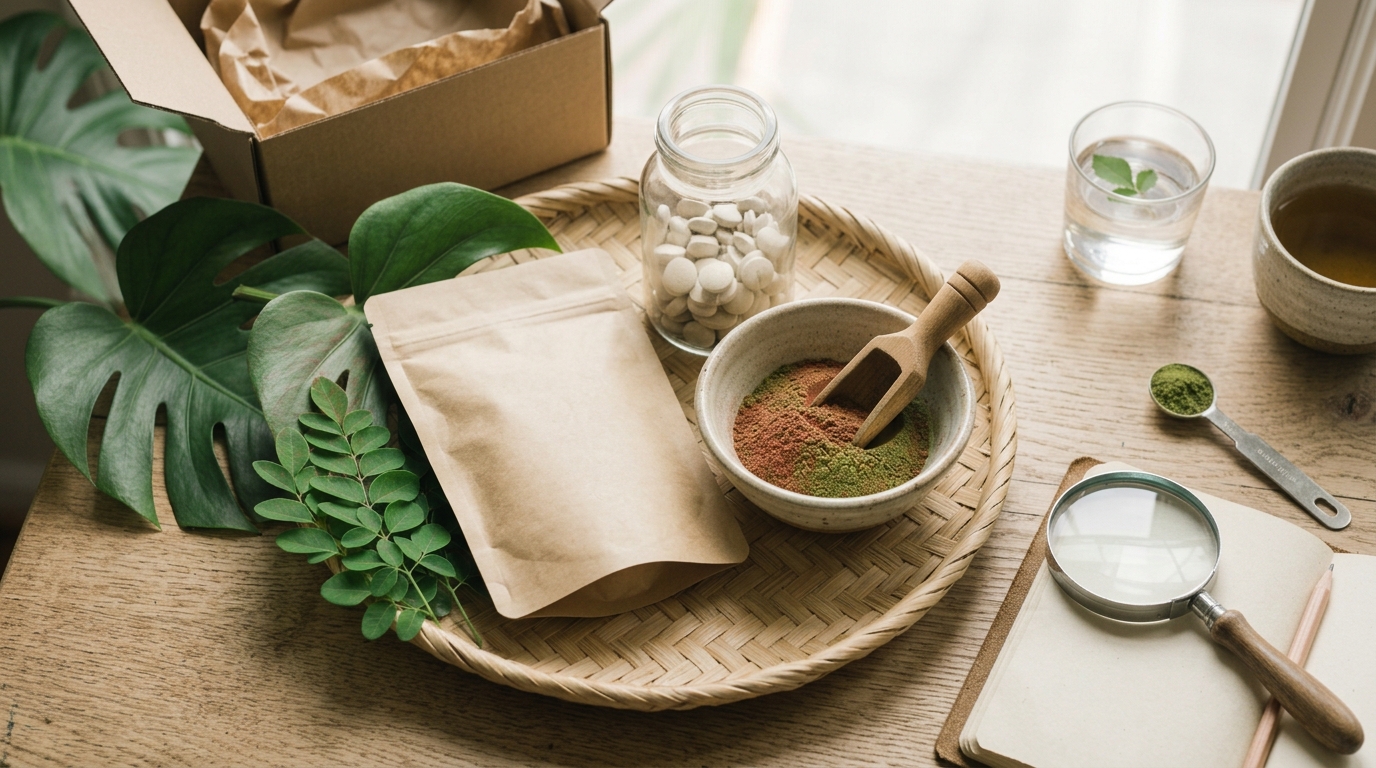
The key ingredient, kratom powder, comes from the leaves of the Mitragyna speciosa tree, native to Southeast Asia. Traditionally, kratom has been appreciated for its grounding and aromatic properties. In soap form, it adds an earthy tone, a greenish hue, and a subtle scent that many users find refreshing.
When combined with nourishing ingredients like coconut oil, olive oil, or shea butter, kratom soap becomes a wonderful natural alternative to store-bought bars. It offers a smooth cleansing experience while aligning with eco-conscious and handmade beauty trends.
Understanding the Use of Kratom Soap
Before diving into the making process, it’s helpful to understand why people use kratom soap and how it fits into a natural skincare routine.
1. A Natural Cleansing Alternative
Kratom soap is an alternative to synthetic soaps that is botanical-based. It is also known that many people will choose to use natural soaps since it will reduce the amount of exposure to other artificial additives and maintain the natural balance of the skin.
2. Gentle and Refreshing Feel
Because of its oils and natural formulation, the kratom soap is generally smooth and more moisturizing than commercial soaps. It does not cause the skin to be overly dry.
3. Aromatic and Earthy
The scent of kratom soap is one of the most memorable characteristics of this product – it is very earthy, green, and cool. It brings in the feeling of groundwork as well as rejuvenation and is therefore very popular amongst people who love natural smells.
4. DIY Customization
Kratom soap allows room for personalization. You can add essential oils, natural colorants, or exfoliating agents like oatmeal or coffee grounds to make your soap unique. This DIY flexibility makes kratom soap a fun project for creative individuals.
Ingredients of Kratom Soap
Creating kratom soap doesn’t require professional equipment. Most ingredients are easily available and safe to use with proper handling. Here’s a detailed breakdown of the essentials:
1. Kratom Powder
This is the star ingredient. Choose a high-quality, pure kratom powder from a trusted source. The powder adds color, natural texture, and an earthy touch to your soap.
2. Base Oils
Every soap needs a combination of oils that provide moisture, structure, and lather. Some popular options include:
- Coconut Oil: Creates a firm bar with a rich, bubbly lather.
- Olive Oil: Adds a creamy texture and moisturizing quality.
- Castor Oil: Enhances lather and helps bind ingredients.
- Shea Butter or Cocoa Butter: Adds smoothness and richness.
3. Lye (Sodium Hydroxide)
Lye is essential in soap making. It reacts with oils in a process called saponification, turning fats into soap and glycerin. Always handle lye carefully and follow safety protocols — wearing gloves and goggles is strongly recommended.
4. Distilled Water
Used to dissolve lye before combining with oils. Distilled water ensures purity and prevents unwanted reactions from minerals found in tap water.
5. Essential Oils (Optional)
For fragrance, you can use essential oils such as:
- Lavender
- Peppermint
- Tea Tree
- Eucalyptus
- Lemongrass
Each oil gives your kratom soap a distinctive aroma and natural character.
6. Colorants or Add-Ins (Optional)
Natural additives like turmeric, spirulina, or activated charcoal can be used to enhance color or texture. For exfoliation, add oatmeal, coffee grounds, or dried herbs.
Step-by-Step Guide: How to Make Kratom Soap at Home
Making kratom soap is simple once you understand the steps. Here’s a detailed process to help you craft your own from scratch.
Step 1: Prepare Your Workspace
Safety first! Choose a clean, ventilated area, and wear gloves, long sleeves, and safety goggles. Ensure you have all your ingredients measured and tools ready.
Step 2: Gather the Ingredients
You’ll need:
- 16 oz olive oil
- 8 oz coconut oil
- 4 oz shea butter
- 4 oz castor oil
- 4 oz lye (sodium hydroxide)
- 10 oz distilled water
- 2 tablespoons kratom powder
- 1 tablespoon essential oil (optional)
Step 3: Mix the Lye and Water
Carefully add lye to water (never the other way around) while stirring slowly. The solution will heat up — this is normal. Let it cool to around 100–110°F.
Step 4: Melt the Oils
In a large pot, melt the solid oils (coconut and shea butter) and then add the liquid oils (olive and castor). Allow the mixture to cool to a similar temperature as your lye solution.
Step 5: Combine and Blend
Slowly pour the lye solution into the oils, mixing gently. Use a stick blender to achieve trace, the point where the soap mixture thickens like pudding.
Step 6: Add Kratom Powder
Once your soap mixture reaches trace, add kratom powder and stir thoroughly. The greenish tint will start to blend evenly through the mixture.
Step 7: Add Essential Oils and Extras
If you’re using essential oils or exfoliants, now’s the time to add them. Mix well to ensure even distribution.
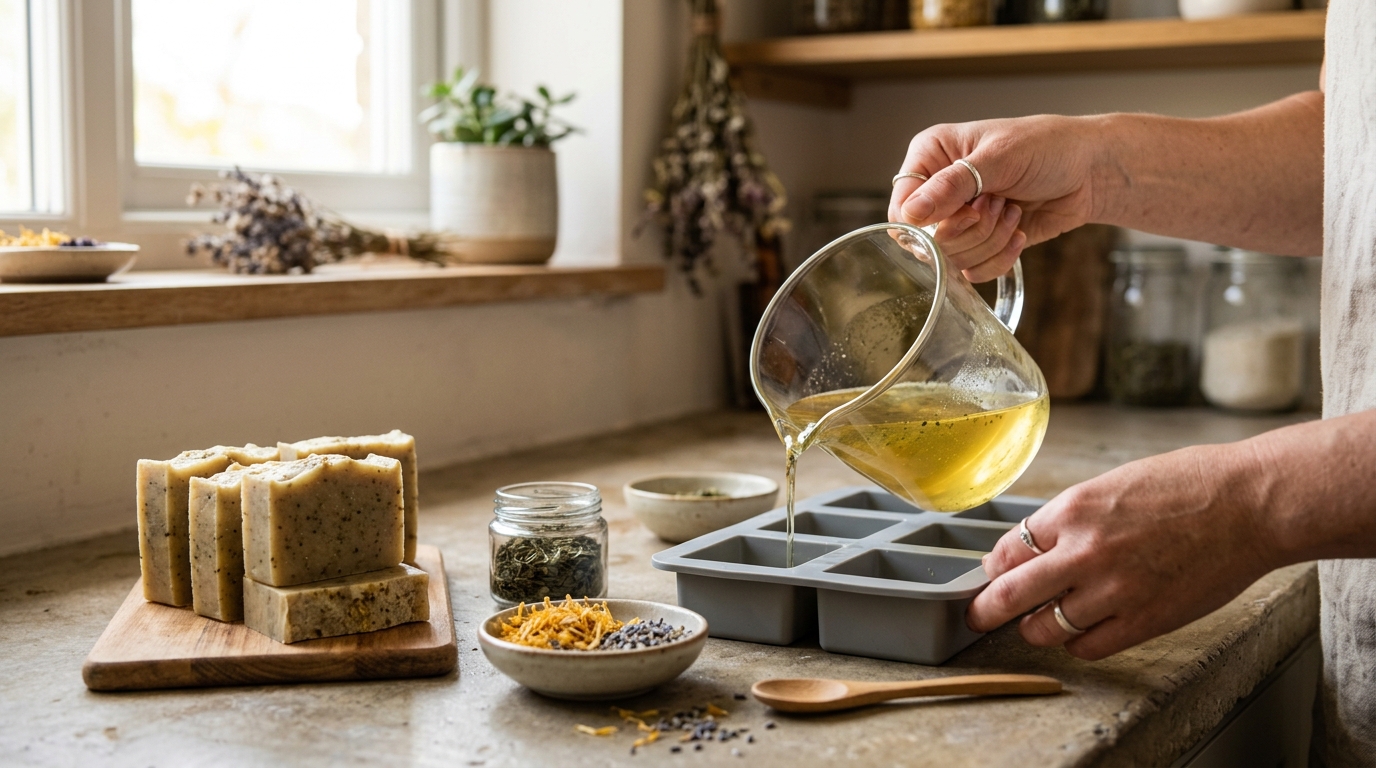
Step 8: Pour into Molds
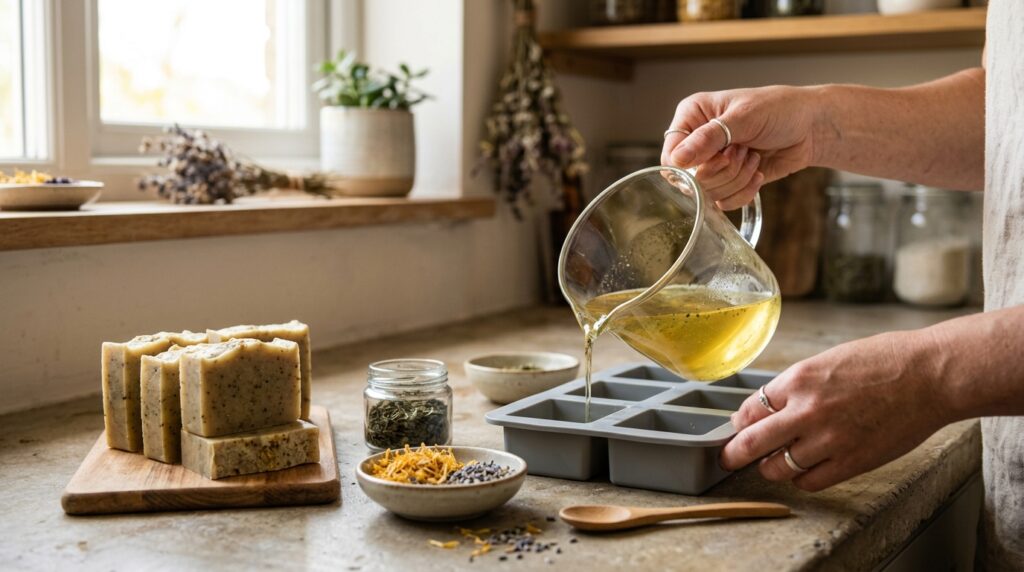
Pour the mixture into silicone molds. Tap them gently to remove air bubbles.
Step 9: Insulate and Cure
Cover the molds with a towel or lid and let them sit for 24–48 hours. Once firm, unmold the soap and place it in a cool, dry area to cure for 4–6 weeks. Curing ensures the soap hardens properly and becomes gentle on the skin.
Tips for Perfect Kratom Soap
- Measure Accurately: Soap making is part art, part science. Precise measurements ensure the right texture and consistency.
- Avoid Overheating: Keep your oils and lye solution at similar temperatures for smooth blending.
- Experiment Carefully: Start with small batches when trying new ingredients.
- Label and Store Properly: Store your cured soap in a cool, dry place away from sunlight.
Kratom Soap Benefits
When discussing kratom soap, it’s important to focus on aesthetic and experiential benefits rather than medical ones. Here’s what makes it appealing:
1. Natural and Eco-Friendly
Kratom soap fits well with eco-conscious lifestyles. Its ingredients are plant-based, biodegradable, and free from synthetic detergents.
2. Aromatic and Refreshing
Depending on your chosen essential oils, kratom soap can offer a refreshing aroma that enhances your bathing routine.
3. Handmade and Customizable
Unlike store-bought products, kratom soap is fully customizable. You can adjust scent, color, texture, and ingredients according to your preference.
4. Earthy Visual Appeal
The natural green tint from kratom powder gives your soap a unique, artisanal look — perfect for personal use or gifting.
5. Smooth and Gentle on Skin
The combination of natural oils creates a soap that feels soft and nourishing on the skin without harsh additives.
Exploring the Science Behind Soap Making
Soap making revolves around saponification, the chemical reaction between fats (oils) and an alkali (lye). The result is soap and glycerin. Kratom powder doesn’t interfere with this process but adds botanical value, texture, and a natural green hue.
This balance between chemistry and creativity is what makes DIY kratom soap both fascinating and fulfilling. You’re not just making a product; you’re creating a piece of natural craftsmanship.
Creative Variations to Try
Once you’ve mastered the basic kratom soap recipe, you can experiment with exciting variations:
- Kratom & Peppermint Soap: Add peppermint essential oil for a cool, refreshing feel.
- Kratom & Lavender Soap: Combine kratom with lavender oil for a relaxing aroma.
- Kratom & Coffee Scrub Bar: Add ground coffee for gentle exfoliation and a unique scent.
- Kratom & Charcoal Detox Bar: Mix in activated charcoal for a dark, sleek bar with a modern appeal.
- Kratom & Citrus Burst: Use a blend of lemon, orange, and grapefruit oils for a vibrant, zesty fragrance.
Sustainability and Ethical Considerations
Sustainability plays an important role in modern DIY practices. When sourcing kratom powder, choose ethical and transparent vendors who support fair trade and environmentally conscious harvesting. Similarly, opt for organic oils and eco-friendly packaging when possible.
Creating kratom soap at home not only promotes sustainable living but also helps reduce reliance on mass-produced, plastic-packaged products.
Final Thoughts
By making kratom soap at home, you can be creative and eco-friendly and add the simplicity of nature into your everyday life. It can be easily designed, tailored, and fit the contemporary wellness and sustainability demands. With a blend of quality ingredients, correct methods, and some inspiration, you can make a soap that is both useful and attractive.
Kratom soap does not only care about washing, the soap is also about creating something personal, conscious, and naturally inspired. You can use kratom soap to make soap by yourself, as a present, or to practice sustainable self-care, and as such, kratom soap is a botanical spin on conventional soap production.
With knowledge, patience, and respect for natural ingredients, your homemade kratom soap can become a small yet meaningful step toward a cleaner, greener lifestyle.
More Resources
Working out with Kratom: Is it worth it?